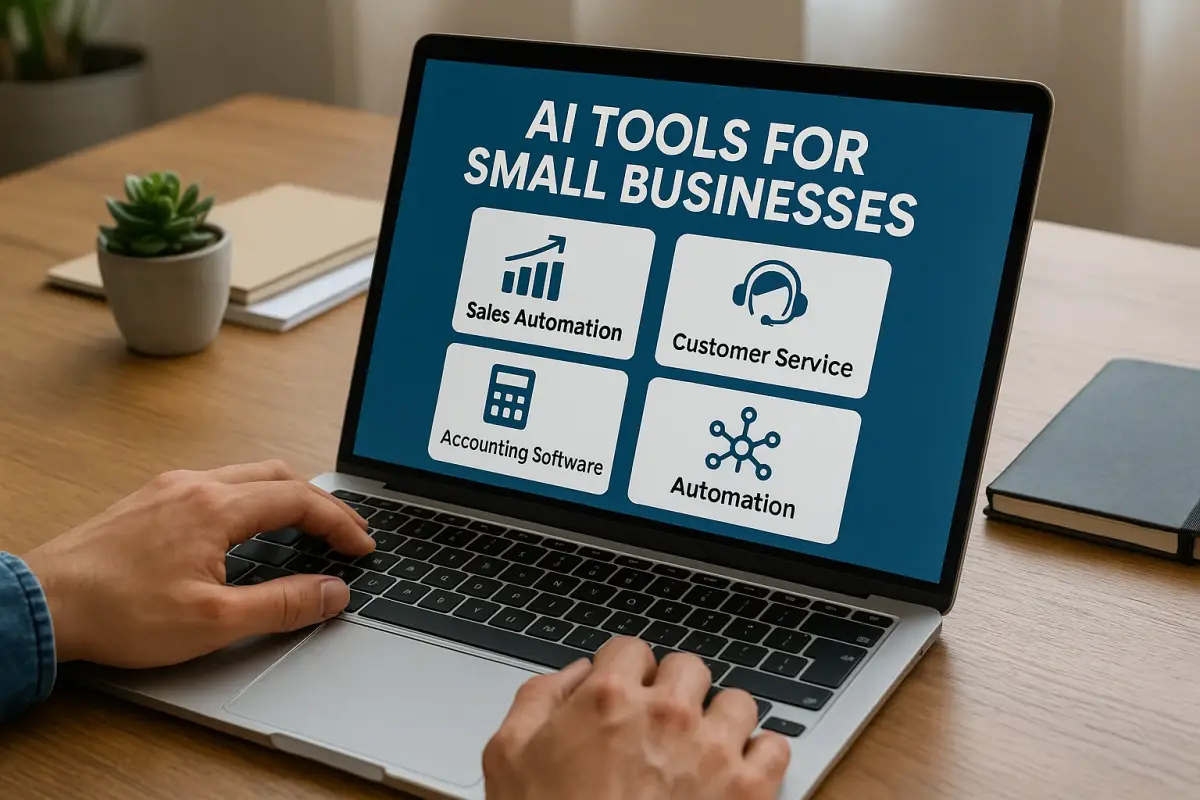

AI marketing automation tools are software platforms that use artificial intelligence to streamline and enhance core marketing functions, including campaign management, content creation, and personalized customer experiences. For marketers looking to boost efficiency, deliver more relevant messaging, and make data-driven decisions, these tools offer a compelling path forward. They handle repetitive work, improve return on investment through targeted strategies, and scale easily as teams and audiences grow. For small and medium businesses (SMBs) in particular, they make advanced marketing tactics accessible without enterprise-level budgets. This post covers their features, benefits, top platform options, and practical guidance for optimizing your campaigns and content.
Understanding AI Marketing Automation Tools
AI marketing automation tools bring together customer relationship management (CRM) systems, email platforms, content tools, and AI algorithms into unified workflows that run with minimal manual intervention. They trigger actions based on customer behaviors, calendar events, or demographic attributes, creating responsive marketing systems that adapt to each prospect's journey.
In practice, these platforms automate email sends, social media posts, lead follow-ups, and cross-channel coordination. This reduces manual effort, lowers operational costs, and accelerates campaign execution. Key components include visual workflow builders that use drag-and-drop interfaces with conditional logic and triggers, integrations that connect CRM data, e-commerce platforms, and analytics tools into a single customer view, and AI layers that add predictive insights and personalization, such as recommending next actions based on past behavior.
Their growing adoption reflects rising customer expectations and intensifying competition. According to industry research, marketing automation reduces marketing overhead by 12.2% on average, freeing teams to focus on strategy and creative work. View the U.S. Chamber of Commerce guide to marketing automation for more details. These platforms represent an evolution from intuition-based marketing to precise, automated strategies powered by machine learning and data integration.
Key Features of AI Marketing Automation Tools
AI marketing automation tools offer a range of capabilities that streamline operations and improve results across the marketing function.
Email and Multi-Channel Orchestration
These platforms manage the full email lifecycle and extend to SMS, push notifications, social media, and website personalization. They create unified customer journeys where messaging stays consistent across every touchpoint, improving both engagement and brand coherence.
Lead Scoring and Qualification
Lead scoring systems evaluate prospects using both explicit data (such as job title and company size) and behavioral signals (such as page visits and email clicks). AI models predict purchase likelihood, helping sales teams prioritize the prospects most likely to convert.
AI-Powered Content Creation
Generative AI capabilities draft personalized emails, ad copy, and social media posts tailored to specific audience segments. These tools adjust content based on user data and engagement patterns, reducing creation time while maintaining relevance.
Customer Segmentation
Dynamic segmentation groups audiences based on behaviors like site visits, purchase history, and engagement patterns. Segments update automatically as new data arrives, combining multiple factors for precise targeting that keeps pace with changing customer behavior.
Performance Analytics
Built-in analytics track key metrics including open rates, click-through rates, and conversion data through visual dashboards. Attribution modeling identifies which channels and campaigns drive results, supporting more informed budget allocation.
CRM Integration
Two-way data synchronization between marketing automation and CRM platforms builds comprehensive customer profiles. This supports account-based marketing strategies and ensures smooth handoffs between marketing and sales teams.
As noted in Salesforce's marketing automation guide, these capabilities eliminate manual steps and unify channels for greater efficiency.
Benefits for Small and Medium Businesses (SMBs)
For SMBs operating with limited budgets and lean teams, marketing automation levels the playing field by making it possible to run sophisticated campaigns that would otherwise require much larger staff. Entry-level pricing tiers pack meaningful functionality without prohibitive costs, and platforms scale smoothly as the business grows, adding capabilities without requiring additional hires.
Personalization scales effectively through automation, delivering customized messages to large audiences without manual effort. This drives loyalty and repeat purchases. Data insights reveal which channels, messages, and segments perform best, enabling rapid optimization. For practical guidance on getting started, explore our guide on marketing automation for small business.
McKinsey reports that personalized AI-driven campaigns yield 5-8 times the return on marketing spend. Check their personalization insights for supporting data. The net result is that SMBs can compete with larger organizations on the strength of their marketing execution, not just their marketing budgets.
Top AI Marketing Automation Tools Recommendations
Here are leading AI marketing automation platforms, each offering distinct strengths for different business needs.
HubSpot Marketing Hub integrates email, CRM, and AI content capabilities in a single platform. It is user-friendly with a free starter option, though costs can rise with larger contact lists. Pricing starts at $18/month, making it a strong fit for SMBs that want an all-in-one solution.
Adobe Marketo Engage excels in lead scoring and account-based marketing with robust AI analytics. Its depth comes with a steeper learning curve and enterprise-level pricing (available on request), making it best suited for B2B organizations managing long sales cycles.
ActiveCampaign offers visual workflow builders and predictive AI at accessible price points, starting at $15/month. It is versatile and affordable, though it has less depth for e-commerce-specific use cases. A solid choice for mid-sized businesses focused on email automation.
Brevo handles multi-channel communication including email and SMS, with free tiers available for budget-conscious teams. It is ideal for SMBs with high-volume sending needs, though its feature set may feel limited for larger enterprises.
Klaviyo is purpose-built for e-commerce, with predictive analytics tailored to retail metrics like cart abandonment and customer lifetime value. Pricing varies by contact count, and it is the strongest option for online stores looking to recover lost revenue.
Omnisend simplifies e-commerce automation with generous free plans and intuitive workflow building. Its focus on retail means it may not suit non-commerce use cases, but it is a good starting point for small shops exploring automation.
Customer.io enables event-based messaging through flexible APIs, making it ideal for SaaS companies and technical teams. It requires some coding knowledge and prices by message volume, making it a fit for growth-stage companies with developer resources.
For more on how CRM and marketing automation work together, explore our post on AI CRM for small business.
How to Choose the Right AI Marketing Automation Tool
Selecting the right platform starts with a clear understanding of your current pain points and goals. Consider factors like ease of use, depth of AI capabilities for personalization, available integrations with your existing tech stack, scalability for future growth, total cost of ownership, and regulatory compliance requirements.
Common pain points that drive tool selection include siloed customer data, generic messaging that fails to engage, and manual processes that consume team bandwidth. A structured evaluation process helps: define specific goals (such as increasing qualified leads or improving email engagement), audit your current tools and data, demo shortlisted platforms, and estimate ROI based on the features most relevant to your situation. For SMBs, the priority should be affordable, intuitive platforms that can grow with the business without overwhelming the team.
Case Studies and Real-World Examples
Real-world implementations illustrate what these tools can achieve in practice. An SMB using HubSpot to deliver behavior-triggered personalized campaigns saw conversions increase by 20% through targeted nurture sequences. A retailer deployed Klaviyo to send AI-generated cart abandonment reminders, recovering 15% of abandoned carts and generating meaningful revenue lift. Another organization used ActiveCampaign's lead scoring to boost qualified leads by 25% while significantly reducing manual workflow management.
McKinsey's research supports these results, finding that personalization lifts conversion rates by 15-25% across industries. These examples demonstrate that the ROI from marketing automation is not theoretical; it is achievable with the right tools and thoughtful implementation.
Challenges and Best Practices
Implementing AI marketing automation is not without challenges. Poor data quality undermines personalization accuracy, and over-reliance on automation can make communications feel impersonal. Privacy regulations like GDPR add complexity, requiring careful attention to consent management and data handling. Integration challenges can arise when connecting new tools with legacy systems.
Best practices to address these issues include starting with simple automations that deliver quick wins before building complexity. Align marketing and sales teams on shared goals and definitions. Test continuously, using A/B testing for subject lines, content, and timing to let data guide decisions. Maintain human oversight to ensure automated communications retain a personal, authentic tone. Use analytics dashboards to monitor performance and refine campaigns based on what the data reveals.
AI marketing automation tools are transforming how businesses manage campaigns, create content, and deliver personalized experiences at scale. They bring efficiency, data-driven decision-making, and the ability to compete effectively regardless of team size. For SMBs especially, these platforms provide access to marketing capabilities that were previously available only to organizations with much larger budgets and staff.
To explore which tools and strategies fit your business, reach out to The Automators for guidance on streamlining your marketing campaigns and content workflows. If you are just starting your automation journey, our beginner's guide on how to start automating your business provides a solid foundation.