
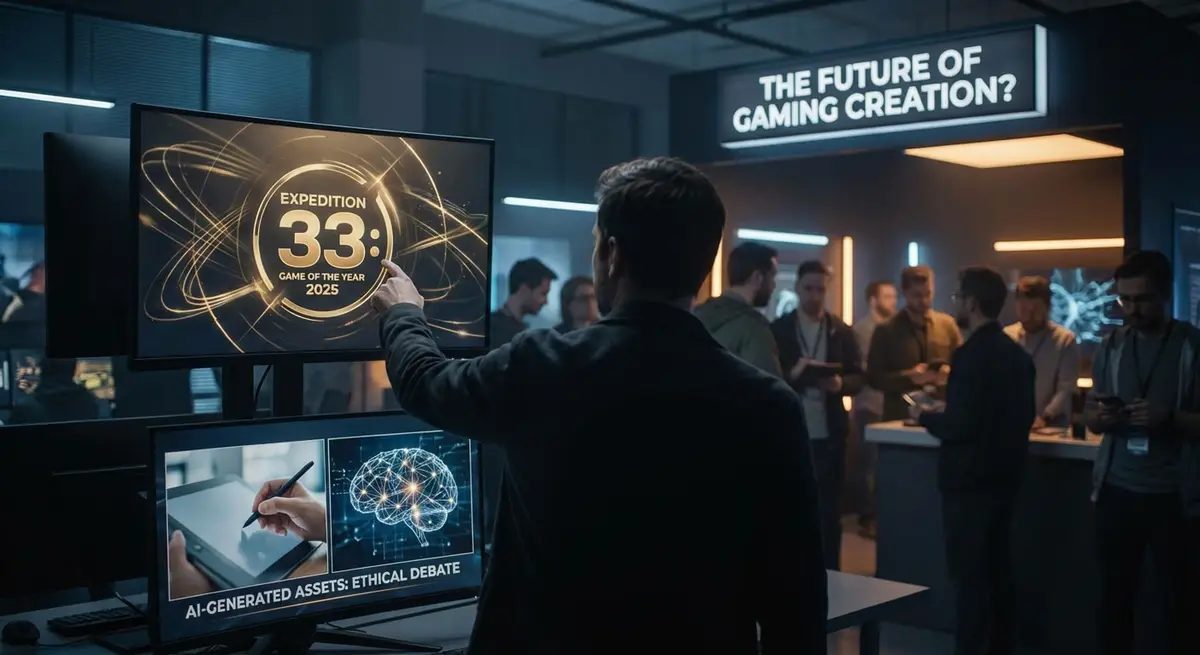
Clair Obscur: Expedition 33 is the topic everyone in the AI and gaming worlds is talking about right now. This turn-based RPG, launched in 2025 by Sandfall Interactive, swept Game of the Year at The Game Awards. But it is not just the accolades making headlines. The real story is the storm surrounding its use of AI-generated assets. This controversy blends thrilling game design with fundamental questions about technology's role in creativity. Let's explore what happened, why it matters, and what it means for the future of AI in games.
Picture a game that captivates players worldwide and sweeps awards ceremonies, only to face backlash over the discovery of AI tools used in its development. Released by Sandfall Interactive, this RPG blends fantasy worlds with strategic battles. It earned top honors, but the real excitement comes from the debate over how AI shaped its creation. A small indie team inadvertently sparked a massive conversation about ethics in game development.
AI in Game Development: The Spark That Lit the Fire
AI in game development is nothing new, but Expedition 33 pushed it squarely into the spotlight. Developers at Sandfall Interactive acknowledged using AI for placeholder textures during early stages of development. These were intended to be temporary, helping the team prototype ideas quickly. However, some of these AI-generated elements made it into the final game, triggering significant backlash.
Consider how machine learning tools can generate visual assets rapidly. In this case, AI assisted with textures like patterns on walls or fabrics within the game world. The team maintained it was strictly for testing, not the finished product. Yet players discovered leftover assets that had not been swapped out before launch. This oversight turned a celebrated game into a focal point for debate.
The key moment arrived when fans dug into the game's files and found textures that appeared to come from AI generators rather than human artists. The discovery spread rapidly across forums, fundamentally changing how many people viewed the game's success.
Developer Admissions: Clearing the Air
When the news broke, Sandfall Interactive responded publicly. In July 2025, they clarified that "some" AI was used in early development versions. This came after players called them out online. By December, director Guillaume Broche addressed the growing backlash directly.
The team insisted AI was limited to placeholder assets. They denied heavy reliance on it for final production work. To address the situation, they released a patch soon after launch that removed the remaining AI-generated textures. However, some fans accused the developers of being misleading, claiming not everything was replaced as promised.
Broche's statements aimed to rebuild trust. He explained how AI accelerated the prototyping phase, a common practice in small studios with limited resources. This connects to broader trends where AI assists in creative workflows without replacing human craftsmanship.
Public Backlash: The "AI Slop" Label
The backlash was intense. On platforms like Steam, players labeled Expedition 33 as "AI slop," criticizing the unreplaced assets and comparing the situation to using art without proper credit. Forums buzzed with heated debates, with some calling the approach deceptive.
- Many felt betrayed, believing the game's visual beauty came entirely from human effort.
- Others worried about employment implications, fearing AI might displace artists in the gaming industry.
- Comparisons emerged to games like The Alters, where AI was used openly for prototypes.
Media outlets joined the conversation as well. Some questioned why the story was not covered more widely, and one report highlighted the quiet patch release, speculating that larger news outlets had overlooked it. Despite the controversy, the game continued winning new fans, demonstrating how quality gameplay can endure through turbulence.
At the heart of the debate was a difficult question: is using AI for placeholders acceptable if it helps small indie teams compete? Or does it cross a line when those assets remain in the final product? These questions fueled ongoing discussion, turning Expedition 33 into a symbol of AI's complicated role in creative industries.
Patches and Fixes: Responding to the Outcry
Sandfall acted quickly after launch, issuing a patch to remove the lingering AI textures. The move demonstrated they were listening to feedback, though it also prompted accusations of dishonesty about the completeness of earlier replacements.
The patch rolled out quietly, which only added to the controversy. Some players felt the low-key approach was an attempt to avoid further scrutiny. Nevertheless, it addressed the core issue and allowed the game to stand more firmly on its own merits.
Director Broche's December 2025 statement was pivotal. He reiterated that AI was used only for early-stage work, not the heart of the game. No evidence surfaced of AI use beyond textures. Other games had experimented with AI in areas like voice acting, but Expedition 33 had not gone down that path.
This response highlights a growing trend: studios are learning that transparency about AI usage is essential for avoiding backlash. For Expedition 33, the fix helped, but the debates continued well into late 2025.
Broader AI Trends in the Gaming Landscape
Expedition 33 is not alone in using AI this way. Other studios, including Larian, have employed AI for prototyping as well. It is widely seen as a tool for boosting efficiency, especially for small teams with limited budgets.
BBC coverage connected this controversy to larger AI shifts in gaming, noting how AI can generate voices or visual assets to speed up development. But it raises a critical question: when does assistance become replacement?
- In Arc Raiders, AI-generated voices were tested, showing experimental applications.
- Critics compared Expedition 33 to these cases, noting varying levels of openness about early-stage AI use.
- The controversy illustrates both AI's potential for innovation and its capacity to generate ethical concerns.
Despite no evidence of AI in other areas like sound design or narrative, the texture issue remained a sticking point. It serves as a reminder of how AI in creative fields generates both excitement and apprehension.
Game Success Story: How Expedition 33 Swept Awards
Even amid the controversy, Clair Obscur: Expedition 33 became a massive hit. It swept The Game Awards, winning Game of the Year along with several other categories. Players praised its turn-based battles, rich narrative, and stunning visuals, AI hiccups aside.
The game "swept the world of video games," as one report described it. Its success demonstrates that exceptional gameplay can endure controversy. Fans discovered a gem that blended strategy with fantasy, drawing in millions of players worldwide.
The awards highlighted the game's genuine strengths: immersive worlds, clever mechanics, and compelling storytelling. For many players, the AI issue simply did not diminish the experience, proving that quality can carry the day.
Ethical Debates: The Future of AI in Gaming
The Expedition 33 saga raises important questions about AI's role in game development. Supporters argue it helps small teams compete with major studios. Critics counter that it risks displacing artists and deceiving players about a game's origins.
Fan debates continue, with some alleging ongoing lack of full transparency. The developers' clarifications and patch demonstrate steps toward honesty, but the conversation is far from settled.
This connects to wider ethical discussions about AI in creative work, including those explored by the World Economic Forum. As machine learning models advance, games will likely incorporate them more extensively. The key will be transparency, ensuring players know what is human-made and what is AI-assisted.
Looking ahead, Expedition 33 could set precedents for the industry. Studios may begin labeling AI usage clearly, building trust through openness rather than risking backlash through silence.
Community Voices: Fan Reactions
Communities on platforms like Steam became battlegrounds for the debate. Posts called out "AI slop," sharing screenshots of suspect textures, while others defended the game, arguing that placeholder use is standard practice in development.
- Some fans boycotted the game, feeling they had been misled about its production.
- Others kept playing, drawn in by the RPG's depth and quality.
- Discussions compared the situation to art appropriation, sparking broader conversations about credit and originality.
Media coverage echoed these tensions. One outlet questioned why the story faded from headlines despite its significance. This points to how AI-related news can sometimes slip under the radar even when its implications are substantial.
Through it all, the game's community continued to grow. Players shared tips, fan art, and theories, with the AI debate woven into the fabric of the community itself. It is a testament to the game's fundamental appeal.
Industry Implications: Lessons Learned
What can the industry take away from Expedition 33? First, be transparent about tools. Concealing AI usage invites backlash, as this case clearly demonstrates.
Second, while patches can address problems after the fact, prevention is far more effective. Checking for leftover placeholder assets before launch avoids the issue entirely.
Third, AI's role in game development is expanding. From textures to full asset generation, it is changing how games are built. Balancing AI assistance with human creativity will be one of the defining challenges for the industry.
Critics have noted similarities to other studios' experiences. Larian Studios' AI use was discussed casually at the time, illustrating how attitudes vary across the industry. For indie studios like Sandfall, AI can level the playing field, but it demands careful, transparent handling.
Wrapping Up
Expedition 33 began as a game launch and became a landmark moment in the ongoing conversation about AI in creative industries. From placeholder textures to award sweeps, Sandfall Interactive's story illustrates both the power and the risks of AI in gaming.
As AI evolves, expect more stories like this one. Whether this leads to clearer industry standards or further debate remains to be seen. For now, Clair Obscur: Expedition 33 stands as a compelling example of what happens when technology and talent intersect, complete with all the complexity that entails.
If you follow AI trends or gaming, this is a story worth watching. It raises genuine questions about where artificial intelligence will take creative industries next.