
Updated June 2026
Busan’s AI automation agency.
Join Busan businesses shipping AI automation in 2 to 6 weeks.
AI automation for Busan businesses across port, maritime, shipping and logistics, shipbuilding and marine equipment, automotive and manufacturing, finance, and film and tourism, the verticals that anchor South Korea second city and its maritime capital. We deliver in 2 to 6 weeks with PIPA and PIPC compliance, FSC alignment for the finance hub, South Korea data residency, and Korea Standard Time delivery.
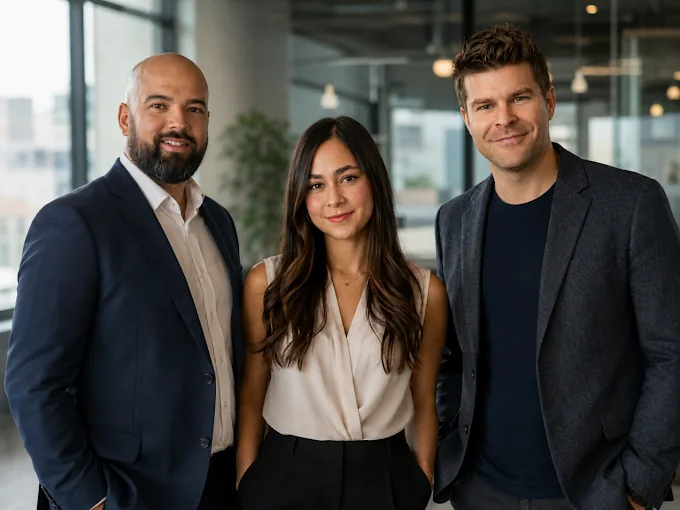
Handled end to end by professionals.
Chad, Jesse, and Camilly lead the team that builds, ships, and maintains your automations.
Sources: Container industry rankings, Port of Busan throughput 2024; Statistics Korea, provisional regional income 2023
In short: The Automators designs and ships AI automation for Busan businesses: chatbots, voice agents, document processing, and workflow systems built around South Korea compliance requirements. Typical projects go live in 2 to 6 weeks, integrate with the tools you already run, and start small enough to prove ROI before scaling.
- GenCon
- TC Energy
- Techmation
- mCloud Technologies
- Autopro Automation
- Webvelopment
- Colony Construction
- Ace Track Golf
- Scotellas Ventures
- Independent Environmental Monitoring Agency
- EShine Cleaning
- NEWHAUS
- RELVO
- 403Tech
- bobbie
- Sold by Silvana
- Busy Beaver Construction
- GTS Real Estate
Send a message. Real reply within 24 hours.
We read every Busan inquiry personally and respond within one business day — no chatbot, no boilerplate.
The rise of AI automation in Busan.
Busan is South Korea maritime capital and its second largest city, with about 3.27 million residents and a gross regional product near 114 trillion KRW in 2023. The Port of Busan handled roughly 24.4 million TEU of containers in 2024, ranking among the world busiest ports and serving as Northeast Asia primary transshipment hub. Around half of that traffic is transshipment cargo, which gives the city a freight-forwarding, customs-brokerage, and terminal ecosystem far larger than its population alone would suggest.
The marine economy runs deep. HJ Shipbuilding and Construction builds on Yeongdo, Hanwha Ocean has named Busan as a hub for naval maintenance, repair, and overhaul, and Renault Korea runs its single Korean assembly plant in the city. Finance is the other pillar: the Korea Exchange, South Korea sole securities and derivatives operator, is headquartered at the Busan International Finance Center, where BNK Financial Group, Busan Bank, and more than 30 financial and public institutions cluster around a maritime-finance and derivatives specialisation.
All of that activity generates relentless manual work. Logistics operators rekey bills of lading, customs declarations, and arrival notices around the clock. Shipbuilders and equipment suppliers chase inspection records, certificates, and supplier documentation. Finance teams at the BIFC run KYC, transaction monitoring, and recordkeeping under FSC and FSS standards. Manufacturers coordinate production and maintenance across multiple plants. These are exactly the high-volume, rules-based workflows that AI handles well.
Busan firms that deploy AI for port and customs documentation, marine inspection records, finance-hub compliance, and round-the-clock customer service are pulling ahead while peers stay on manual process. With Korea Maritime and Ocean University, Pusan National University, and Pukyong National University supplying maritime, ocean-engineering, and technical talent, Busan is one of the strongest places in Asia to put production AI to work, on a stable UTC+9 clock with no daylight-saving shifts to manage.
How does AI automation help Busan businesses?
It takes the work your team repeats every day and hands it to software agents: chatbots and voice agents cover inquiries around the clock, document automation clears the back office, and workflows keep every system in sync. The playbooks below map those patterns to Busan's industries across global markets. See our published case studies for real client work.
| Sector | Engagement | Outcomes & impact |
|---|---|---|
| CASE 01Port and logistics | Customs and documentation automation for a Busan logistics operatorFreight forwarders and 3PLs serving the Port of Busan rekey bills of lading, customs declarations, and arrival notices across the transshipment day. AI reads the inbound documents, extracts the structured fields, validates them against booking data, and routes exceptions to the operations desk with the supporting paperwork already attached. | 50% LESSDocument handling time per shipment cut by more than half. FEWER ERRORSCustoms declaration errors caught before submission, not after. REDIRECTOperations staff redirected from rekeying to genuine exceptions. AUDITEDEvery clearance step logged for an audit-ready trail. |
| CASE 02Shipbuilding and marine equipment | Inspection-record automation for a Busan marine-equipment supplierShipbuilders and marine-equipment suppliers around Yeongdo and the southeastern belt manage inspection reports, classification certificates, and supplier documentation on every build. AI extracts the structured data, classifies each record against the job and the vessel, and flags missing certificates before they hold up the next milestone. | FASTERCertificate and inspection packages assembled in a fraction of the time. NO GAPSMissing-document gaps flagged ahead of each build milestone. IN SYNCQuality and procurement systems kept in sync without rekeying. TRACEABLEFull traceability preserved for classification and audit review. |
| CASE 03Finance | KYC and back-office automation for a Busan finance-hub firmFinancial firms at the Busan International Finance Center run client onboarding, KYC refresh, and transaction monitoring under FSC and FSS standards. AI handles the document chase, runs the screening passes, and routes real-risk alerts to the compliance analyst with the supporting transaction trail already attached. | DAYS TO HRSOnboarding and KYC refresh cycles shortened from days to hours. CONTINUOUSSanctions and adverse-media screening run continuously, not in batches. FP DOWNAnalyst time on false positives reduced sharply. AUDIT-READYPIPA and FSC audit-ready documentation preserved end to end. |
Most Busan teams start with one high-leverage automation, prove the ROI in weeks, then scale from there.
Book free consultationCompliance & regulators in Busan.
The regulatory framework Busan deployments meet by default — local laws + sector overlays where they apply.
PIPA and the PIPC
Busan deployments are built to the Personal Information Protection Act and the Personal Information Protection Commission rules, including the cross-border transfer restrictions in force since the March 2024 Enforcement Decree, with South Korea data residency by default.
FSC and FSS for the finance hub
Finance-hub work for Korea Exchange-adjacent firms, BNK Financial Group, and Busan Bank is aligned to Financial Services Commission and Financial Supervisory Service standards, with recordkeeping and audit trails suitable for regulator review.
Korea Customs Service and port compliance
Logistics and trade automation respects Korea Customs Service clearance requirements and Ministry of Oceans and Fisheries port rules, including the customs and tax framework of the Busan-Jinhae Free Economic Zone.
Which AI automation services fit Busan businesses?
Most Busan engagements start with one of three patterns: conversational AI to catch inquiries and bookings, document automation to clear back-office queues, or workflow automation to connect the tools your team already runs. These are the services we deploy most often across South Korea, and each links to the full practice page.
AI document and content processing
Bills of lading, customs declarations, arrival notices, inspection records, certificates: Busan port and marine work runs on documents. We automate ingestion, extraction, and routing end to end with a full audit trail.
Learn moreWorkflow and project automation
Freight coordination, customs handoffs, shipyard documentation, finance-hub back office: multi-system Busan workflows that span ports, brokers, and ERP, connected so work moves instead of accumulating.
Learn moreIntelligent chatbots and conversational AI
Logistics customers, festival and tourism visitors, and finance clients all expect 24/7 answers. AI chat and voice handle Korean and English inquiries, integrated with your booking, CRM, and tracking systems.
Learn moreWhere does automation leverage run deepest in Busan?
In the sectors where repetitive coordination eats the most hours. The chart ranks 5 Busan sectors by the breadth of automation opportunity we see across their core workflows: the wider the bar, the more of that sector's daily work our deployments can take over today.
Busan runs on throughput.
A snapshot of how fast, and how accountably, our Busan automations ship and run.
Market figures compiled from public municipal and statistical sources during location research.
Resources for Busan businesses.
Learn more about AI automation — free guides, tools, and case studies.
Case studies
Real projects from North American businesses — what we built, the numbers, the lessons learned.
View case studiesAutomation blog
In-depth guides on workflow design, AI agent patterns, and the lessons we wish we knew before shipping our first project.
Read the blogROI calculator
Estimate your annual savings from automating manual work. Industry presets for energy, healthcare, finance, and more.
Run the calculatorAI readiness quiz
Score your organisation on 10 readiness dimensions and get a tailored roadmap of the highest-impact starting points.
Take the quizTechnologies we work with.
We integrate with the platforms your team is on today — no rip-and-replace.
 n8n
n8n Make
Make Zapier
 OpenAI
 Anthropic
 Google Gemini
 Supabase
 AWS
AWS Azure
Azure Salesforce
 HubSpot
 Slack
Slack Airtable
 Notion
 Monday.com
 Stripe
 QuickBooks
 Twilio
 Microsoft 365
 Google Workspace
 GitHub
and many more…
Busan AI, answered.
What does an AI agency in Busan do?
How much does AI automation cost for Busan businesses?
Which Busan industries benefit most from AI automation?
Is my business data safe with a Busan AI agency?
How fast can a Busan business implement AI?
Do you support PIPA and FSC requirements for Busan finance and logistics firms?
From idea to shipped.
In weeks.
Book a free consultation and we will map your highest-leverage workflow to ship first.