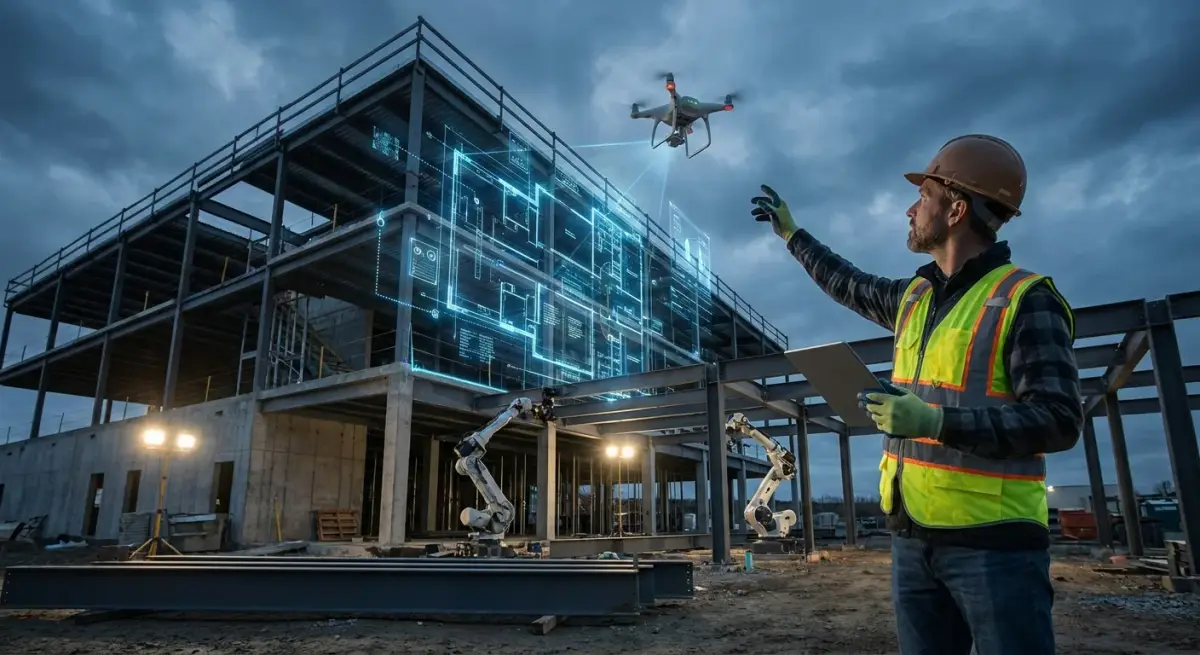
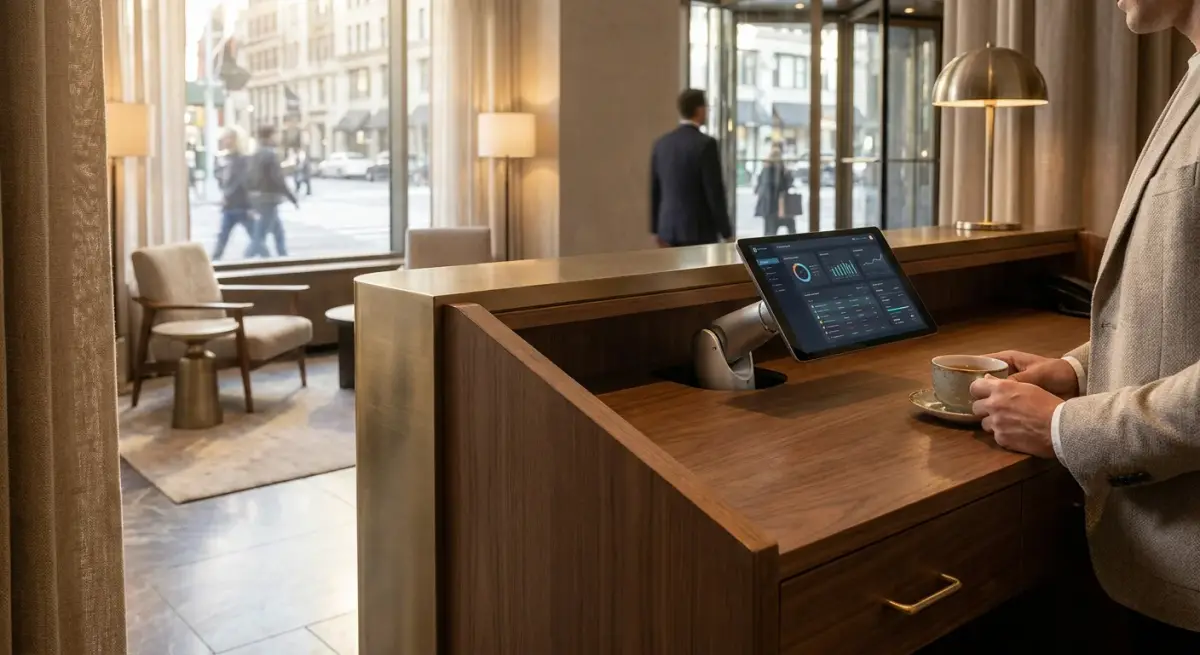
Artificial intelligence has moved from pilot projects to core infrastructure across hotels and travel brands. Use cases for AI in the hospitality industry now shape how guests are found and how rooms get priced. They also reshape how front-line teams spend each shift. Spending reflects that shift. In fact, the market is projected to grow from roughly $20.39 billion in 2025 to $75.66 billion by 2030, an annual rate near 30%. In this guide, we map where AI truly delivers, and how to adopt it without losing the human warmth that defines great service.
Why hotels are investing in AI right now
Three pressures are converging. Labor is harder to hire and keep. Guests expect instant answers at any hour. Margins stay thin. At the same time, the tooling finally works well enough to trust with real workflows.
Adoption confirms the momentum. One global study of hotel chains found that about 78% already use some form of AI. Likewise, a separate survey reported that 82% of hotels plan to expand AI use in 2026. However, scale does not guarantee returns. Deloitte's future of hospitality research shows that only about 10% of organizations report significant returns from advanced AI so far. The lesson is simple. Thus, a clear plan beats buying tools for their own sake.
Where AI adds value across the guest journey
The clearest way to judge hospitality AI is to follow a guest. Each stage of the trip gives AI a different job. Therefore, we break the journey into three parts.
Discovery and booking: travel industry AI
Most trips now start with a search. Travel industry AI ranks listings, tailors recommendations, and adjusts prices in real time. On large booking sites, these models learn which photos, prices, and descriptions convert each type of traveler. Newer agentic systems go further. Specifically, they assemble full itineraries across suppliers for the traveler. Deloitte's 2025 travel industry outlook notes that AI now spans customer service, shopping and discovery, and operations. Hilton's AI Planner shows the pattern inside one brand. Opened to all site visitors in March 2026, it helps guests compare properties through natural conversation. For hotels, that raises the value of clear, current content that AI can read and trust.
In-stay: the AI concierge service
Once guests arrive, an AI concierge service handles routine requests. Through a chat thread or a voice assistant, guests can dim the lights, ask for late checkout, or book dinner. Marriott's "RenAI" assistant and Hilton's early "Connie" robot are well-known examples. Moreover, voice commands can route tasks straight to staff. As a result, requests get handled faster and nothing slips through the cracks. The same system can suggest a spa slot or room upgrade at the right moment, which lifts on-property revenue.
Post-stay: feedback and loyalty
The relationship continues after checkout. AI reads thousands of reviews, sorts the sentiment, and surfaces themes like slow check-in or weak wifi. Managers then fix what matters most. Research also shows that tailored services lift guest satisfaction. Still, they must feel relevant and respect privacy.
The customer service chatbot for hotels
The front desk is where guests feel speed most directly. A customer service chatbot for hotels answers pre-arrival questions and covers the overnight hours. Modern conversational AI tools also reply in many languages without extra staffing. Generative models made these tools far better than the brittle bots of a few years ago. As a result, they handle messy, multi-turn conversations with ease.
Guests are ready for it, too. Surveys show that nearly 80% would use a fully automated front desk. Furthermore, more than 40% prefer to check in by app or kiosk.
What does a good hotel chatbot actually do?
A good hotel chatbot answers common questions instantly and accurately, then hands off to a person the moment a request gets complex. The goal is a clear human fallback, never a dead end.
In practice, the best setups cover these basics:
- Instant answers about parking, amenities, and policies.
- Around-the-clock coverage in the guest's own language.
- Booking changes and upsells pulled live from the property system.
- A smooth handoff to a human for anything sensitive.
Back-of-house: hotel automation solutions that cut cost
Behind the lobby, hotel automation solutions quietly trim cost and waste. Revenue management is a standout. For example, a Cornell University study found that AI-driven pricing raised revenue by 7.2% on average. Energy is another big win. Notably, Hilton reports more than $1 billion in cumulative savings from AI that tunes heating, cooling, and lighting.
The gains add up across departments, often through quiet workflow automation behind the scenes. Predictive maintenance flags failing equipment early. It watches sensor data on elevators, pumps, and HVAC, then warns staff before a breakdown disrupts a guest. Meanwhile, smarter scheduling matches housekeeping to real demand, and forecasting cuts food waste. Overall, the World Economic Forum estimates that AI could optimize up to 30% of hospitality labor hours by 2030 without lowering service.
| AI use case | Operational outcome |
|---|---|
| Dynamic revenue management | About 7.2% higher revenue per Cornell research. |
| Energy and room automation | Lower utility cost and steadier comfort. |
| Predictive maintenance | Fewer breakdowns and less downtime. |
| Housekeeping scheduling | Less idle time and overtime. |
| F&B demand forecasting | Reduced food waste and tighter purchasing. |
How to adopt AI without disrupting service
The safest path is narrow and measured. Instead of automating everything at once, start with one high-friction workflow. Connect it to your booking or property system, and keep a person in the loop. Guest data raises the stakes. Therefore, privacy must be designed in from day one. The NIST AI Risk Management Framework offers a trusted blueprint for this kind of responsible, human-centered rollout.
When we scope a first project, we anchor it to a real pain point. Then we prove the value before expanding. Pick a number to watch, such as response time or direct bookings, and track it from day one. A practical sequence works well:
- Pick one painful, repetitive workflow.
- Clean and connect the data it needs.
- Pilot with a clear human fallback.
- Measure the result, then scale what works.
Used this way, AI in the hospitality industry does not replace genuine hospitality. Instead, it clears the busywork so staff focus on the warm moments guests remember. That is the outcome we build toward with every property we help.